

built to perform in winter
January 2026
Winter changes how we build. When temperatures drop and weather becomes unpredictable, the difference between staying on schedule and falling behind usually comes down to one thing: how well you planned before winter arrived.
In construction, winter isn’t an obstacle - it’s a variable. One we expect, plan for, and build around.
Plan the Work Around Weather
Staying productive in winter starts long before the snow comes.
We look ahead at the schedule and identify every winter-sensitive scope: concrete placements, exterior assemblies, roofing, glazing, site utilities, and any moisture- or temperature-dependent finishes. From there, we sequence early. The goal is simple: get as much work enclosed, heated, or undercover as soon as possible.
The teams that win winter are the teams that plan their way into controlled conditions.
Logistics Become the Battle
Snow and ice turn simple tasks into delays. Without early planning, winter becomes reactive instead of productive.
A strong winter logistics plan accounts for:
Delivery coordination and site access
Material protection and laydown areas
Snow removal and safe circulation
When logistics are planned early, crews spend their time building — not waiting.
Heat Is a Construction Tool
Heat in winter construction isn’t about comfort. It’s about meeting specifications.
We plan heat sources, fuel logistics, and ventilation early in design and preconstruction so field teams are supported from day one of winter conditions. This includes understanding:
How much heat is required for curing, drying, or material performance
What fuel sources are available and efficient for the site
How heat will be safely distributed within temporary enclosures
How ventilation will be maintained without compromising temperature
When heat is treated as a tool, not an afterthought, quality and productivity follow.
Protection Drives Production
Winter protection is where planning meets execution.
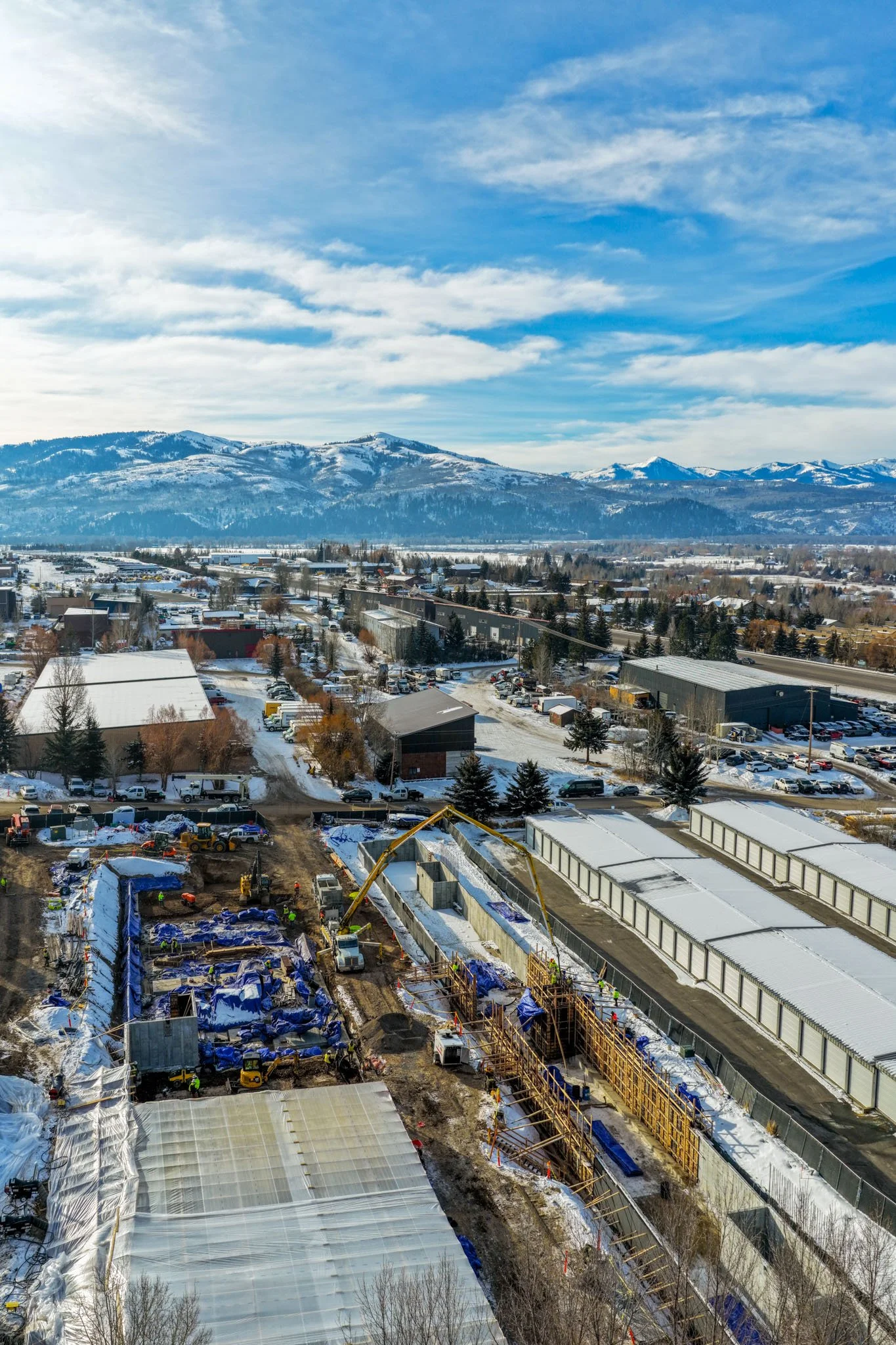
On a project in Jackson, Wyoming, we constructed a full temporary enclosure using 2x4 framing and reinforced poly, then supplied heat with natural gas heaters to create controlled conditions. That approach allowed work to continue safely and efficiently despite harsh winter weather.
Proper protection keeps schedules moving and crews focused.
The Bottom Line
Winter doesn’t care about your schedule. But when risks are identified early, sequencing is intentional, and logistics, heat, and protection are planned around the realities of the season, projects can continue moving forward - even in winter.